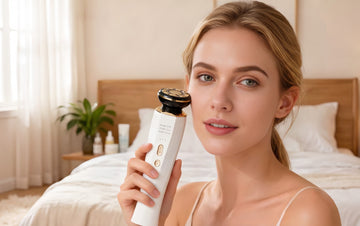
You might think your skin simply rests at night, just like you. But the opposite is true: while you sleep, your skin switches into its busiest mode. Once you understand what happens then, you'll see straight away why your evening routine delivers so much more than your morning routine, and why a sealing night step makes such a difference.
What happens in your skin at night
While you sleep, your skin is in full swing with cell renewal and repair. Blood flow increases, your skin absorbs nourishing ingredients better, and it works on repairing the damage picked up during the day from sun, dirt and stress. So at night your skin is at its most receptive to whatever you apply. That makes the evening the ideal moment for your most nourishing steps.
Why day and night need different things
During the day it's all about protection: against sun, dirt and dryness. At night it's all about nourishing and repairing. Using the same cream at both times isn't wrong, but you're leaving results on the table, because you're not making targeted use of that repair window. A separate evening step that works with that repair gets more out of the same hours of sleep.
The problem: your skincare evaporates or rubs off
However good the skincare you apply in the evening, if most of it evaporates or ends up on your pillow, it does very little overnight. That's exactly where an overnight mask comes in: it forms a layer that holds in the active ingredients and moisture, so your skin can benefit all night long instead of losing it halfway through.
The difference between a night cream and an overnight mask
A night cream nourishes, but an overnight mask goes a step further by forming a sealing layer that keeps everything on your skin. Think of it as the difference between applying something and locking it in. If you really want to get the most out of the night, that sealing step is the key. Our GlowLift overnight mask and GlowWrap night mask are both made for exactly this.
How to make the most of the repair window
After your usual skincare, apply an overnight collagen mask as the final step. While you sleep, it keeps the hydration and collagen on your skin, and you work towards a smoother, fresher result without having to do anything except sleep. You wake up with skin that looks more rested. This sealing step is also step four in the Korean glass skin routine.
In short
Your skin repairs itself hardest while you sleep, so your evening routine is your biggest opportunity. Make sure your skincare lasts the night instead of evaporating, and you'll get far more out of the same hours of sleep. A sealing overnight step is the most direct way to do that.
Frequently asked questions
Should I use an overnight mask every night?
You can, but you don't have to. For many people, a few times a week is enough for visibly fresher skin. Listen to your skin.
Overnight mask over or under my cream?
As the final step, so on top of your usual skincare. It forms the sealing layer that locks everything in.
Is an overnight mask suitable for oily skin?
Yes, as long as you choose a formula that doesn't feel too heavy. The sealing effect is about holding in moisture, not adding oil.
Will I notice it the next morning?
Often, yes: fresher, smoother skin the morning after. The structural effect builds up with regular use.
Want your nights to work for you? Take a look at the GlowLift overnight mask or the GlowWrap night mask.